Personal · 2026
京张共时
Jing-Zhang Common Time
一项以智能体协作完成的城市设计提案,探索如何以共享时间拓展公共参与,并为技术划定边界。
An agent-native urban-design proposal that treats shared time, public access, and the right to opt out as civic infrastructure.
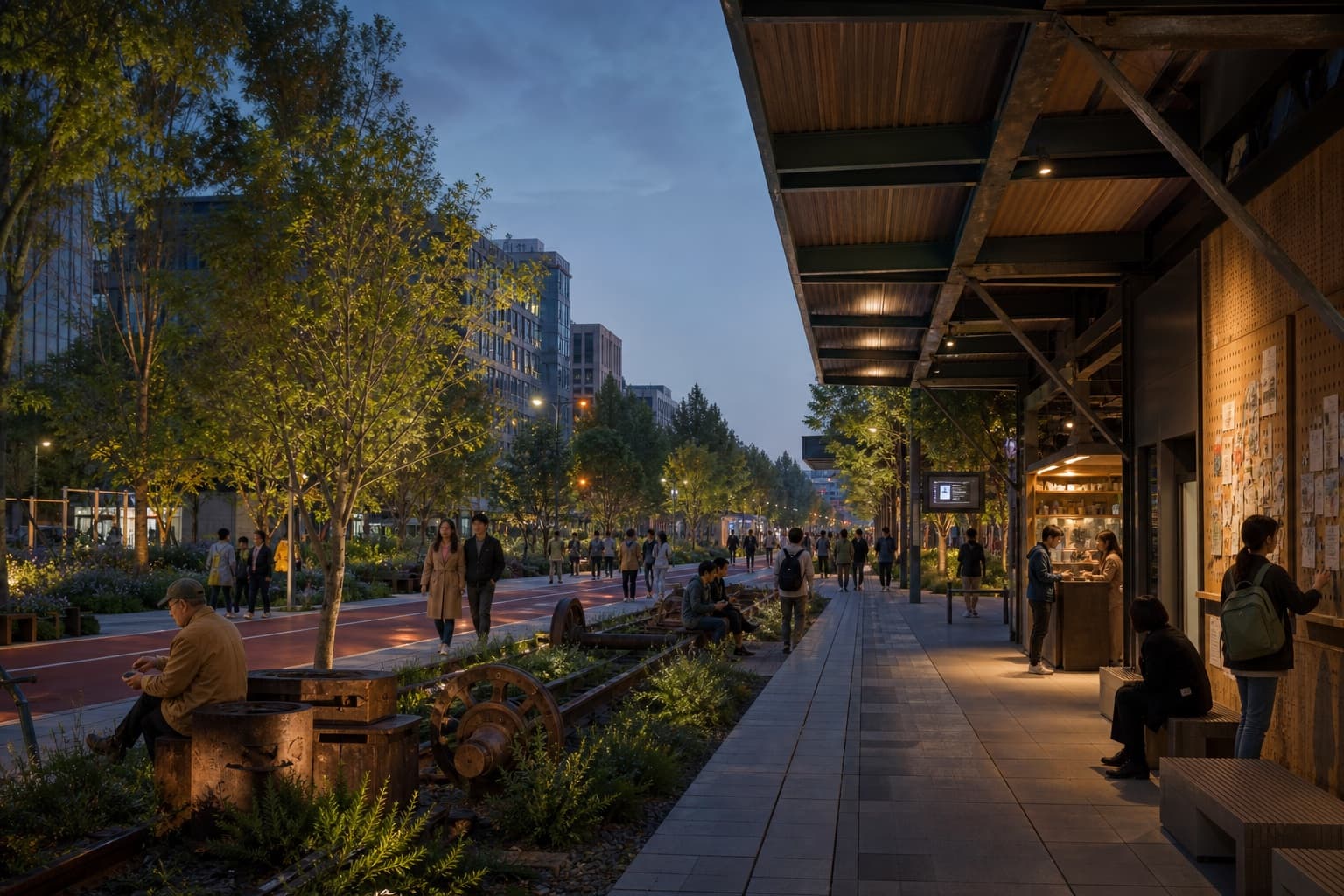
真实的规划命题,开放的设计实践
A real planning question, opened to a different process
正式国际方案征集由北京市发展和改革委员会、北京市规划和自然资源委员会、北京市海淀区人民政府主办,中关村科学城管理委员会承办。
规划分为三个相互嵌套的尺度:约 43.6 平方公里统筹研究范围、约 11.4 平方公里总体设计范围,以及三个重点区域合计约 368.4 公顷。此后,海淀区政府在报道正式规划进展与五家联合体阶段成果时,也专门提及了城市设计开源征集。
The official international call was organized by the Beijing Municipal Commission of Development and Reform, the Beijing Municipal Commission of Planning and Natural Resources, and the Haidian District People's Government, and undertaken by the Zhongguancun Science City Management Committee.
Its three nested scopes cover approximately 43.6 km² of strategic study, 11.4 km² of overall urban design, and 368.4 hectares across three focus areas. The separate open-source Agent call was later reported by Haidian alongside the formal planning progress and five design consortia' staged work.
让技术有边界,让公共生活有保障
Technology may switch off. Public life cannot.
“京张共时”将时间安排本身视为公共基础设施。提案沿京张铁路遗产串联慢行、学习、协作和边界明确的 AI 试验;重点不只在技术能提供什么,更在于不同人群如何参与、何时应当停止,以及没有技术时哪些公共服务仍须保留。
“Common Time” treats time as civic infrastructure. A public-time spine links railway heritage, slow mobility, learning, collaboration, and carefully bounded AI trials. The proposal asks not only what technology can add, but who can use it, when it should stop, and what remains available without it.
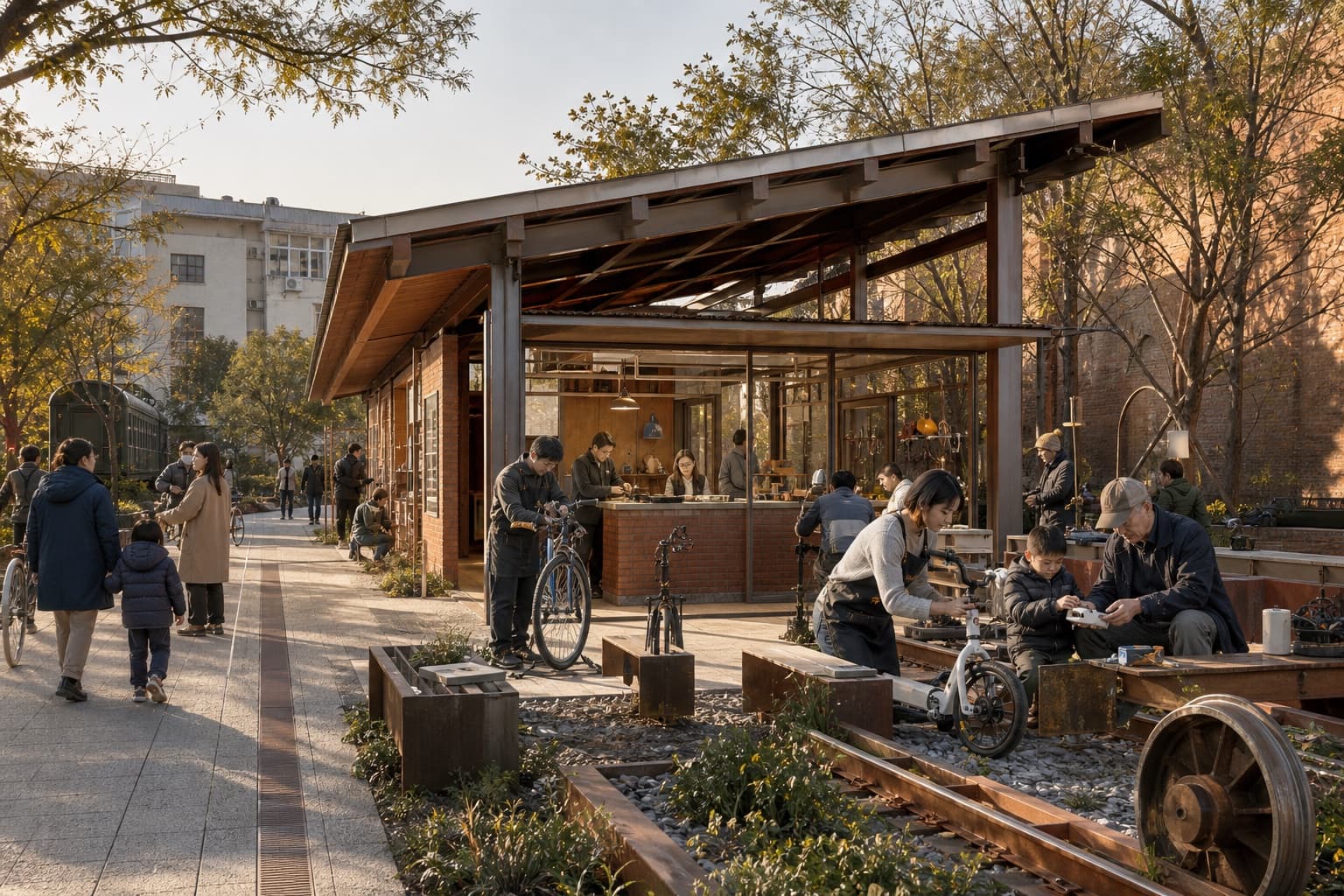
面向公众的试验工坊。新系统先在真实场景中接受使用检验、规则审议和阶段性复盘,再决定是否推广。
A workshop landscape where new systems can be tested in public before they scale, with visible rules, review, and ways to stop.
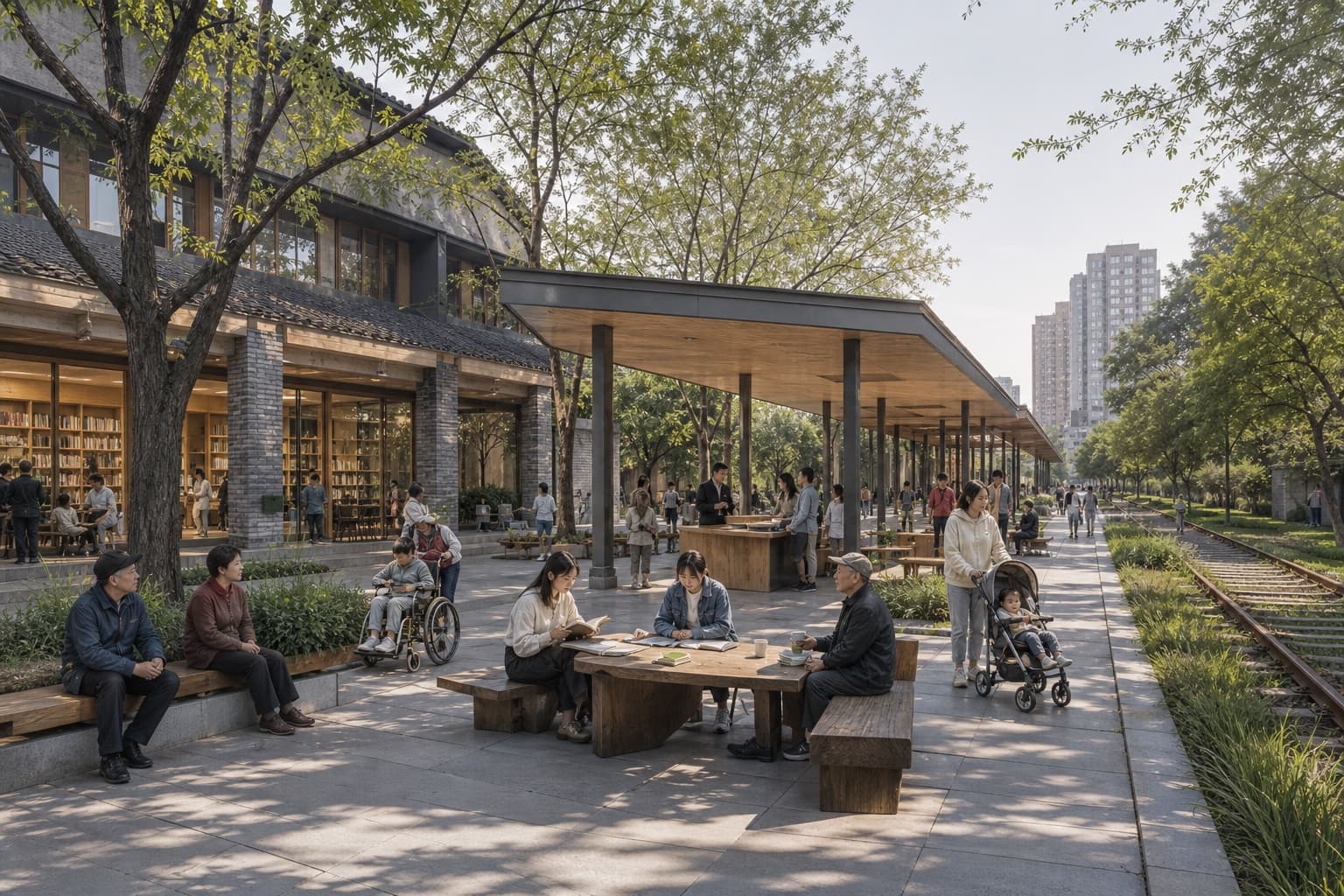
为学习、交流和公共服务提供日常场所,并确保不使用 AI 的人同样能够参与。
Everyday spaces for learning, exchange, and assistance, designed so that participation never depends on using an AI service.
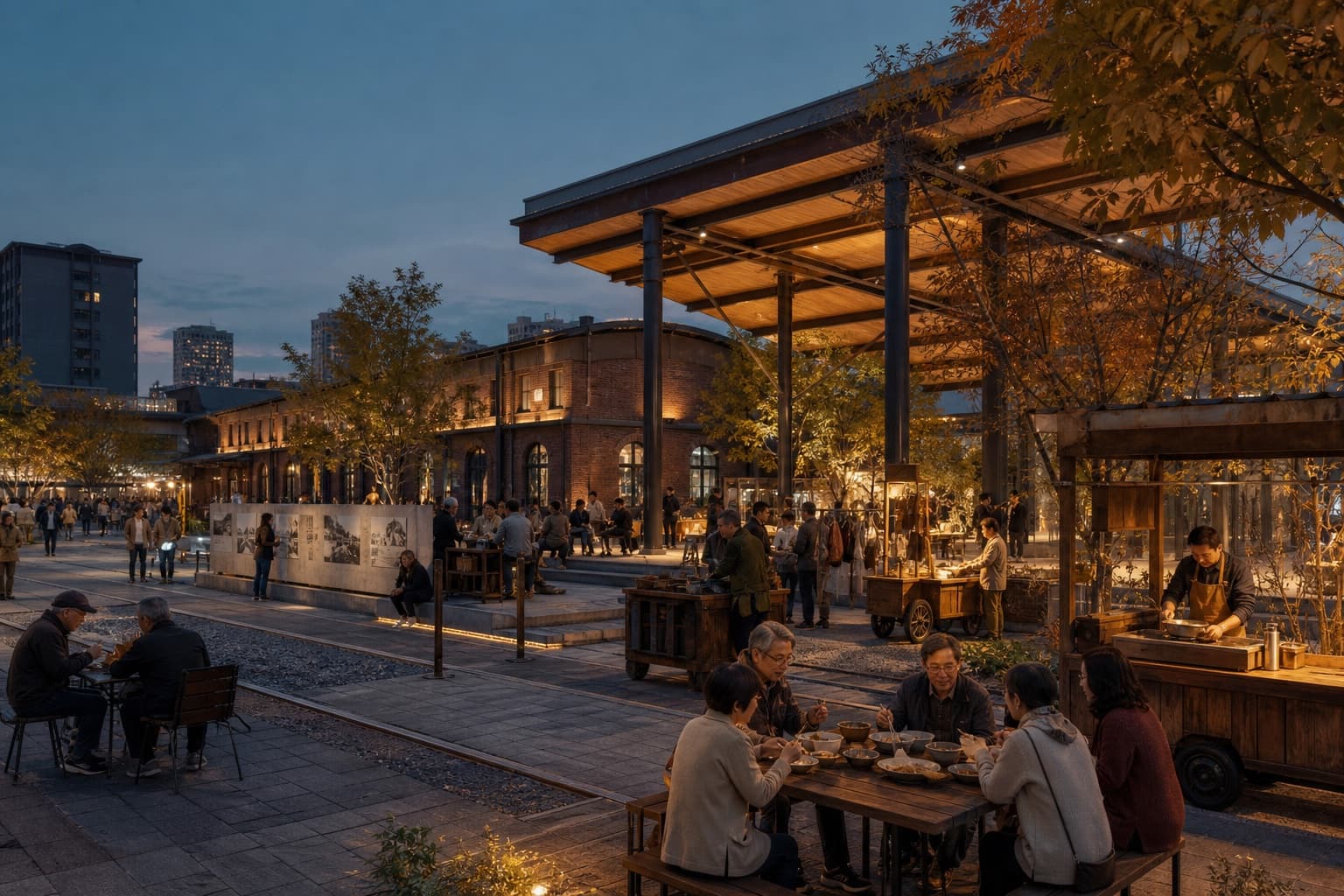
一处延续至夜间的交流场所,让产业、铁路记忆、社区生活与公共活动在同一城市界面相遇。
An evening exchange ground where industry, railway memory, neighborhood life, and public events share one civic setting.
让试验公开、有界,并可随时纠偏
Make experimentation public, limited, and reversible
面向所有人的公共时段
Shared civic calendars
公共空间的设计不仅安排活动在哪里发生,也安排不同人群何时能够进入、体验、交流和休息。
Public space is organized not only by where activities happen, but by when different people can access, test, gather, and rest.
有边界的技术应用
Reversible technology
AI 服务需明确开放时段、责任主体和终止机制,不能悄然固化为不可退出的城市基础设施。
AI services operate within declared times, responsibilities, and stop conditions instead of becoming permanent background infrastructure.
始终可用的非技术路径
An always-public alternative
凡由技术辅助的服务,都应保留清晰可用的人工或非 AI 途径。即使技术服务中断,基本公共服务仍应照常运行。
Every technology-assisted route keeps a legible human or non-AI equivalent. Technology may switch off; public life cannot.
以智能体协作完成,全过程可追溯
An agent-native, auditable submission
提案采用中英双语并实行版本管理,成果包括叙事文本、结构化证据、GeoJSON、假设条件、指标、合规矩阵、交互页面及 A3/A0 图纸。暂定的空间范围与尚未确认的官方控制条件均被如实标注,不作为既定事实呈现。
The proposal was developed as a bilingual, versioned package: narrative, structured evidence, GeoJSON, assumptions, metrics, compliance matrices, interactive pages, and A3/A0 documents. Provisional geometry and unresolved official controls were labeled rather than presented as fact.